



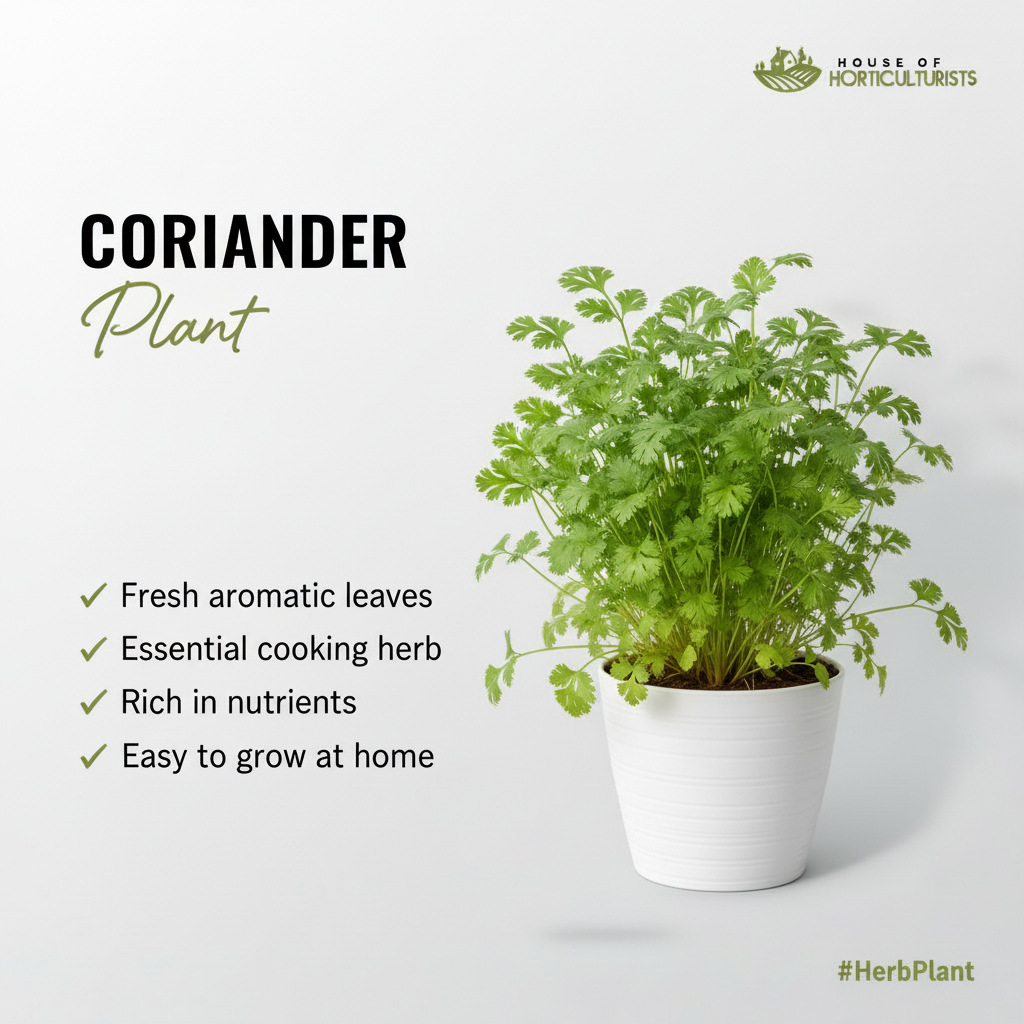
Fresh Coriander Plant (Dhania) — Essential Kitchen Herb Pakistan Original price was: $500.00.$349.00Current price is: $349.00.
Coriander — known as Dhania across every Pakistani household — is without doubt the most essential and widely used herb in Pakistani cooking. From morning omelettes to evening curries, from everyday daal to special occasion biryani — fresh dhania is the finishing touch that completes every Pakistani dish.
Now grow your own fresh, organic coriander at home — in a pot, raised bed, balcony planter, or kitchen garden — and enjoy an endless supply of farm-fresh dhania right at your fingertips. Order today and never run out of fresh coriander again.
Description
KEY FEATURES / BULLET POINTS
- 🌿 Pakistan’s Most Essential Kitchen Herb — Fresh dhania used daily in virtually every Pakistani household
- 🚀 Extremely Fast Growing — Harvest-ready leaves within 3 to 4 weeks from planting
- 🍽️ Culinary Staple — Essential for curries, chutneys, rice dishes, salads, and garnishing
- 🌱 Easy to Grow — One of the simplest herbs for complete beginners to grow at home
- 🪴 Container & Bed Friendly — Grows equally well in pots, raised beds, grow bags, and garden beds
- 💰 Cost Saving — Grow unlimited fresh dhania at home and eliminate daily market visits
- 🏠 Indoor & Outdoor Suitable — Perfect for balconies, rooftops, kitchen windowsills, and gardens
- 🌍 Organic & Chemical Free — Grow your own pesticide-free coriander for healthier cooking
- ♻️ Continuous Harvest — Regular cutting encourages fresh regrowth for ongoing supply
- 🎁 Perfect Starter Plant — Ideal first herb plant for anyone beginning their kitchen garden journey
About Coriander (Dhania) Plant
Ask any Pakistani cook which herb they simply cannot live without — and the answer will almost always be the same: Dhania.
Coriander is the heartbeat of Pakistani cuisine. Its fresh, citrusy, aromatic leaves appear in virtually every dish prepared in Pakistani kitchens — from the simplest weekday daal to the most elaborate Eid biryani. It is the herb that finishes a dish, elevates a chutney, and brings a curry to life.
Yet despite being used every single day in millions of Pakistani homes — most families still buy their dhania from the market — where it is often wilted, chemically treated, and expensive relative to its quantity.
Growing your own coriander at home changes everything. A small pot of dhania on your kitchen windowsill or balcony gives you fresh, fragrant, chemical-free leaves exactly when you need them — harvested seconds before use, at the absolute peak of freshness and flavour.
At House of Horticulturists, we supply healthy coriander plants and quality seeds to help every Pakistani family grow their own fresh dhania at home — easily, affordably, and organically.
Why Every Pakistani Kitchen Needs Homegrown Coriander
The Problem With Market Dhania:
- Often wilted and losing freshness within hours of purchase
- Frequently sprayed with pesticides and chemical preservatives
- Expensive relative to quantity — especially in winter and summer peaks
- Daily or every-other-day market trips just to have fresh dhania
The Solution — Grow Your Own:
- Fresh leaves harvested seconds before use — maximum flavour
- Completely organic and chemical-free
- Continuous supply — no market trips needed
- Cost-effective — one small investment yields months of fresh herbs
- Immensely satisfying to cook with herbs from your own garden
Culinary Uses of Coriander (Dhania) in Pakistani Cooking
Coriander is used in virtually every category of Pakistani cooking — making it the single most versatile and essential herb in the Pakistani kitchen:
Curries & Gravies: Fresh coriander leaves are the classic garnish for every Pakistani curry — from chicken karahi to beef nihari, from daal tadka to aloo gosht. A generous handful of fresh dhania transforms the presentation and flavour of every curry.
Chutneys: Hari dhania chutney — made with fresh coriander, green chilli, garlic, and lemon — is arguably the most loved condiment in Pakistani cuisine. Made with homegrown fresh coriander, the flavour is incomparably superior.
Rice Dishes: Fresh coriander is layered into biryanis and pulao during cooking — imparting a beautiful aromatic depth that dried herbs simply cannot achieve.
Salads & Raita: Fresh coriander leaves add brightness and freshness to cucumber raita, kachumber salad, and mixed vegetable salads — essential at every Pakistani dining table.
Omelettes & Egg Dishes: Dhania in Pakistani omelettes and egg dishes is non-negotiable. Fresh homegrown coriander elevates even the simplest anda breakfast into something special.
Soups & Lentils: A generous finishing of fresh coriander on lentil soup, haleem, or shorba adds the final flavour layer that completes the dish.
Dahi & Chaat: Fresh coriander is essential in Pakistani street food — from dahi phulki to papri chaat — adding freshness and visual appeal to every bite.
Coriander Seeds — Dhania Seeds: Beyond the leaves — coriander seeds are one of the most used spices in Pakistani cooking. Allow your coriander plant to flower and set seed — harvest and dry the seeds for a continuous supply of homegrown dhania seeds for your spice rack.
Medicinal & Health Benefits of Coriander
Beyond the kitchen — coriander has been used in traditional South Asian medicine for centuries and continues to be validated by modern nutritional science:
Digestive Health: Coriander is one of the most effective natural digestive aids available. It stimulates digestive enzymes, relieves bloating and gas, and soothes stomach cramps. Coriander seed water — made by soaking seeds overnight — is a traditional Pakistani remedy for digestive discomfort.
Blood Sugar Management: Research suggests coriander may help regulate blood sugar levels by stimulating insulin secretion — beneficial for Pakistan’s growing diabetic population.
Cholesterol Support: Coriander has been shown to reduce LDL cholesterol and increase HDL cholesterol — supporting cardiovascular health with regular consumption.
Anti-inflammatory Properties: Coriander contains powerful antioxidants and anti-inflammatory compounds — beneficial for reducing chronic inflammation associated with many health conditions.
Iron & Nutrient Rich: Fresh coriander leaves are an excellent source of iron, Vitamin C, Vitamin K, and folate — making them a genuinely nutritious addition to daily cooking.
Skin Health: Coriander’s antibacterial and antifungal properties make it beneficial for skin health. Coriander-infused water is used as a natural toner for clear skin in traditional beauty remedies.
Kidney Health: Coriander seed water is traditionally used as a natural diuretic — supporting kidney function and urinary health.
Growing Conditions — Pakistan Climate Guide
Coriander is a cool to moderate weather herb — it thrives best in Pakistan’s autumn, winter, and spring seasons.
Best Planting Season in Pakistan:
| Season | Recommendation |
|---|---|
| ❄️ October to February | Best season — cool weather produces lush, flavourful leaves |
| 🌸 February to March | Good — mild spring conditions work well |
| ☀️ April to June | Challenging — heat causes rapid bolting |
| 🌧️ July to September | Poor — monsoon humidity causes disease |
Sunlight: Coriander grows best in partial to full sunlight — 4 to 6 hours of direct sun is ideal. In winter — maximum available sunlight is beneficial. In warmer months — light afternoon shade extends the harvest period before bolting.
Watering: Water regularly to keep soil consistently moist — coriander does not tolerate drought. Water when the top inch of soil feels dry. Ensure good drainage — waterlogged soil causes root rot and fungal disease. In winter — water every 2 to 3 days. In warmer months — daily watering may be needed.
Soil: Coriander prefers well-draining, moderately fertile soil enriched with organic compost. Use quality potting mix for container growing. Avoid overly rich soil — it produces lush growth but can reduce flavour intensity.
Temperature: Coriander thrives in temperatures between 15°C and 25°C — perfectly matching Pakistan’s autumn and winter conditions. Above 30°C — coriander bolts rapidly, shifting energy from leaf to seed production. Succession planting every 3 to 4 weeks extends the harvest season.
Container: Coriander grows well in pots, trays, grow bags, and raised beds. Use a container with a minimum depth of 8 inches and good drainage. Wide, shallow containers allow multiple plants and extend the harvest area.
How to Grow Coriander Successfully at Home
From Seeds: Coriander is most commonly grown from seeds — available from HOH’s online shop. Lightly crush seeds before planting to improve germination rate. Sow seeds directly in the final container or bed — coriander does not transplant well due to its sensitive taproot.
Sowing: Sow seeds 0.5 to 1 cm deep in moist soil. Space seeds 5 cm apart for leaf production. Water gently and keep soil moist until germination — typically 7 to 14 days.
Germination: Seeds germinate within 7 to 14 days in ideal conditions. Keep soil consistently moist during this period — allow soil surface to dry slightly between waterings once seedlings emerge.
Thinning: Once seedlings reach 5cm height — thin to 10 to 15 cm spacing for best leaf production. Removed seedlings can be used directly in cooking — they are fully flavourful even as microgreens.
Harvesting: Begin harvesting outer leaves once plants reach 15 to 20 cm height. Always leave the central growing tip intact — this encourages continued leaf production. Cut entire plants at soil level once they begin to bolt for a final large harvest.
Succession Planting: For continuous coriander supply — sow new seeds every 3 to 4 weeks. This ensures a fresh batch of young, leafy plants is always coming through as older plants bolt and finish.
Bolting Management: Bolting — when coriander shifts from leaf to flower and seed production — is the primary challenge. Delay bolting by providing afternoon shade in warm weather, keeping soil consistently moist, and harvesting regularly. Once bolting begins — allow plants to flower and set seed for a homegrown dhania seed harvest.
Coriander Microgreens — A Growing Trend in Pakistan
Coriander microgreens — harvested at the seedling stage of 10 to 14 days — are increasingly popular in Pakistan’s health-conscious community:
- Harvested within 2 weeks of sowing — fastest possible fresh herb
- Nutritionally dense — higher concentration of vitamins than mature leaves
- Intensely flavoured — perfect for garnishing and cooking
- Ideal for apartments with very limited space
- Can be grown in shallow trays on any windowsill
Where to Grow Your Coriander
| Location | Suitability |
|---|---|
| 🍳 Kitchen Windowsill | ✅ Perfect — easy access while cooking |
| 🪟 Balcony | ✅ Excellent — partial sun ideal |
| 🏠 Home Garden Bed | ✅ Spreads beautifully in garden beds |
| 🏙️ Rooftop Garden | ✅ Thrives in containers on rooftops |
| 🌿 Raised Bed | ✅ Ideal growing environment |
| 🥦 Vegetable Garden | ✅ Perfect companion plant |
Companion Planting With Coriander
Coriander is an excellent companion plant in vegetable gardens:
| Plant | Benefit |
|---|---|
| 🍅 Tomato | Coriander repels tomato pests naturally |
| 🥕 Carrot | Attracts beneficial insects that protect carrots |
| 🌶️ Chilli | Mutual pest deterrence |
| 🥬 Spinach | Compatible growing conditions |
| 🧅 Onion | Traditional companion combination |
Why Buy From House of Horticulturists?
- ✅ Healthy, well-established coriander plants and quality seeds
- ✅ Carefully packaged for safe delivery across Pakistan
- ✅ Expert growing guide included with every order
- ✅ Replacement guarantee on damaged plants
- ✅ Fast delivery across Islamabad, Rawalpindi, Lahore, Karachi & nationwide
- ✅ Trusted by 1,000+ happy customers across Pakistan


%20—%20Essential%20Kitchen%20Herb%20Pakistan)
Reviews
There are no reviews yet.